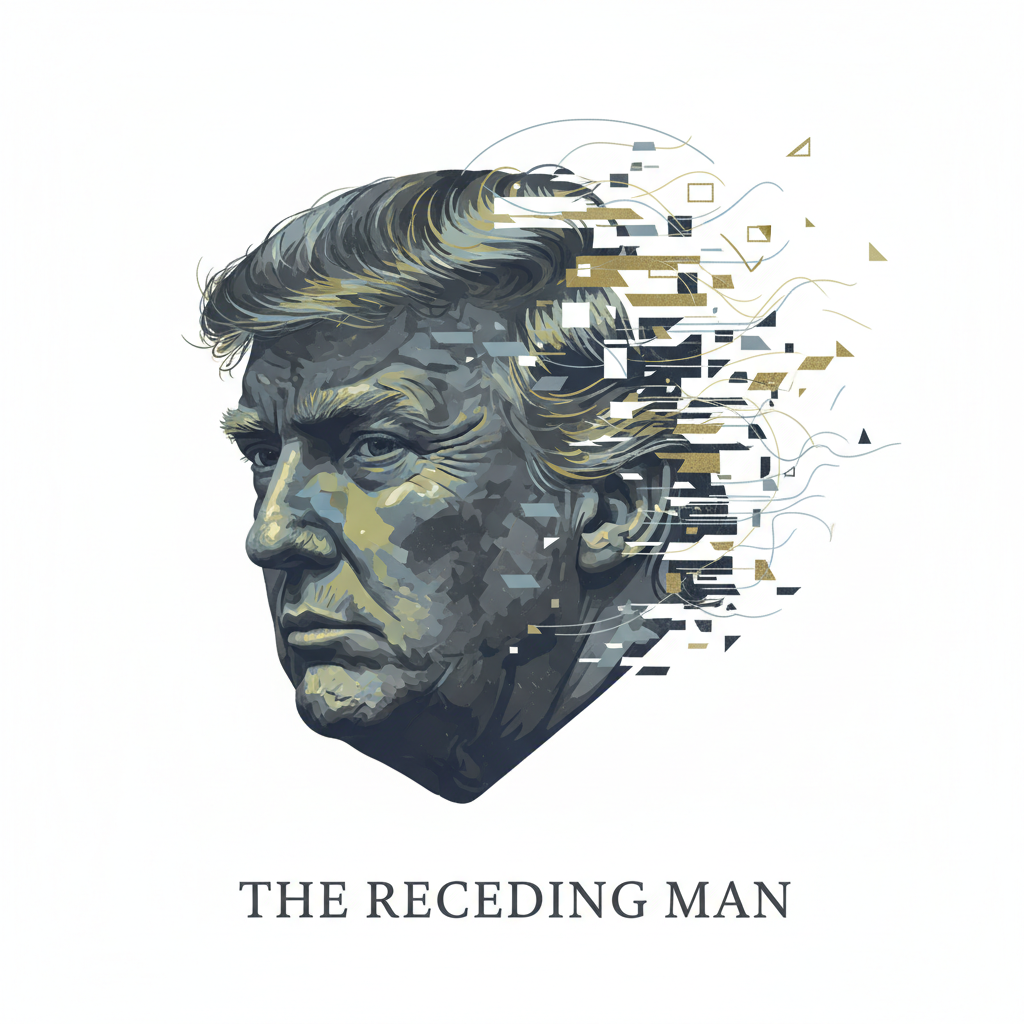
Indiana Lawmakers Defy Trump’s Redistricting Push: A Bellwether of Diminished Influence
The recent failure of former President Donald Trump to push through a Republican-friendly congressional map in Indiana marks a significant turning point, signaling a palpable loosening of his once-iron grip on the Grand Old Party. This incident, while ostensibly a local affair, carries substantial national implications and is likely to send ripples through the political landscape, challenging the perception of Trump’s unchallenged authority.
Redistricting, the process of redrawing electoral district boundaries, is a quadrennial political battleground, often more critical to a party’s long-term power than any single election. It is through strategic redistricting, often involving gerrymandering, that parties can engineer safe seats, consolidate power, and dilute the opposition’s voting strength for a decade. Trump’s direct involvement in Indiana’s redistricting efforts underscored its perceived importance to his ongoing influence within the GOP. His inability to secure the desired outcome, despite his continued popularity among a segment of the Republican base, suggests that state-level lawmakers are increasingly willing to prioritize local interests or their own political calculus over direct fealty to the former president’s directives.
This defiance in Indiana is not merely an isolated incident; rather, it appears to be a crucial data point in a broader trend indicating a gradual erosion of Trump’s absolute dominance. For years, a public slight against Trump, or a divergence from his stated wishes, was often met with swift and severe political repercussions, including primary challenges and a loss of fundraising support. However, as time elapses since his presidency, and with the shadow of potential future electoral bids looming, some Republican operatives and elected officials are beginning to test the boundaries of his influence. The Indiana episode suggests that the political cost of defying Trump may be diminishing, empowering more moderate or independently-minded Republicans to assert their own agendas.
The national reverberations of such a shift cannot be overstated. Should this trend continue, it could fundamentally alter the dynamics of upcoming primary elections, particularly if Trump decides to run for president again in 2024. A weakened ability to dictate outcomes at the state level means less control over the nomination process, potentially leading to more competitive and less predictable primary fields. Furthermore, a Republican Party less beholden to a single figurehead might evolve, fostering diverse ideological factions and potentially leading to a more fractured, albeit potentially more robust, internal debate on policy and party direction. This internal struggle could either invigorate the party by encouraging new ideas or debilitate it through infighting, impacting its performance in critical midterm elections and beyond.
Moreover, the Indiana outcome sends a powerful message to other state legislatures and party committees across the nation. It demonstrates that independent action, even when contrary to the former president’s wishes, can be successfully undertaken. This could embolden other state-level actors to pursue maps and policies that reflect their local priorities rather than conforming to a nationalized Trumpian agenda. Such a decentralization of influence could lead to a more varied and less monolithic Republican Party, with consequences for everything from legislative priorities to candidate recruitment and fundraising strategies. Ultimately, the Indiana redistricting battle serves as a potent reminder that political power is fluid, and even the most formidable figures can see their influence wane when confronted by determined local resistance. This marks a new chapter in the ongoing evolution of the Republican Party post-Trump presidency, with profound implications for its future trajectory and the broader American political landscape.